Celebrating Fathers 4: The Biggest Bear

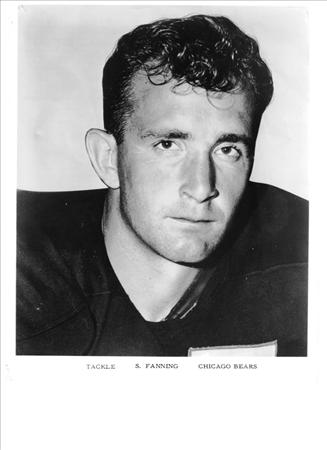
DadBearMy father Stan Fanning wasn’t the fastest player in the National Football League, nor did he have the best arm.

But during the 1961 season, he earned his own superlative—the local media named him Chicago Bear’s “Biggest Bear.” His statistics—6 ft. 7in., 270 pounds—seem almost puny by today’s NFL lineup, but in 1961 when he swaggered onto the field and took his place as an offensive tackle, he was the biggest man in the game….

From my essay, Chicken Farmer to Chicago Bear (My Dad is My Hero, 2009). Read the rest hereMy Dad Is My Hero

(Last in a series celebrating the men who have shown me the meaning of dignity and courage, as well as giving me a love for books, skiing, and RVing (and an appreciation for wrench collecting). Read the rest of the series: 1. Catching Butterflies with the General, 2. The RVing Gene, and 3. The Aggie Wrench Collector.)


Celebrating Fathers 3: The Aggie Wrench Collector

Third in a series celebrating the men who have shown me the meaning of dignity and courage, as well as giving me a love for books, skiing, and RVing (and an appreciation for wrench collecting).

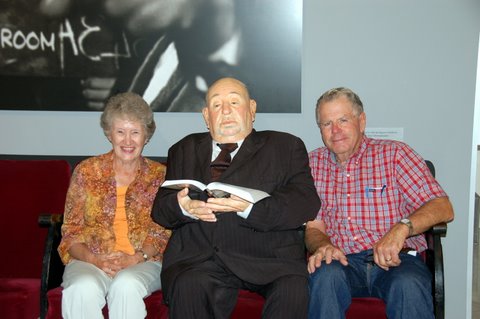
MomPeteSpain2011We arrived in Seattle as the Texas A&M Marching Band jammed on the cd player. P.T. (Pete) Rathbone steered his SUV with one hand and increased the volume with the other. My mom tapped along to the beat of drums while still immersed in reading the Wall Street Journal. And I sat in the backseat, cocooned by Aggie music, Cascade Mountains, and gray sky.

An Aggie alum, Pete plays the marching band every Saturday morning before the football team takes to the field. It’s a good-luck ritual, a reflection of Pete’s many interests, which range from farming to wrench-collecting to traveling.

Technically, Pete’s my stepfather but that word somehow reminds me of Cinderella and scrubbing floors–blame it on my strange imagination. Besides, Pete is more than a simple label—he’s friend, confidante, and co-conspirator. He’ll just as easily sit by your hospital bed as take you on a Caribbean cruise. He’s first to donate to a cause or tackle a pasture full of noxious weeds.

The Aggie music continued as we drove onto the ferry for Bainbridge Island. Pete, Mom, and I were silent, admiring the Seattle skyline to the rousing thrum of trumpets, tubas, and drums.

I had never cared much for marching band music before but that has changed, all because of a wrench-collecting Aggie with a generous heart.

——

The Idaho Statesman featured an article about Pete’s wrench museum, reprinted here in the Deseret News. And order his books here.


Celebrating Fathers 2: The RVing Gene

Second in a series celebrating the men who have shown me the meaning of dignity and courage, as well as giving me a love for books, skiing, and RVing (and an appreciation for wrench collecting).

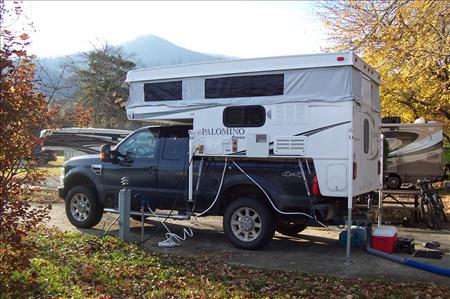
Camper Excerpted from my essay The RVing Gene (Rocking Chair Rebels, RoVers, 2001):

Is it possible that RVing could be passed through generations like blue eyes or big feet? The RV gene was lying in wait for me, deep inside my marrow, inherited from my grandfather Paul Fanning, who was born a nomad.

He packed up my grandmother and his four sons for the long move from Illinois to Arizona in the 1940s. The family station wagon towed a travel trailer with sleeping space for two. The boys slept under the stars….

Someday my grandnieces and nephews will see me, a white-haired lady, pull in front of their homes and hop out from behind the wheel of a motorhome. They will probably giggle at their crazy aunt and her big RV or, if they are teenagers, turn their backs in embarrassment.

But one will give me a big smile and beg to go for a ride, proving that the RV gene is alive and well.


Celebrating Fathers 1: Catching Butterflies with the General

First in a series celebrating the men who have shown me the meaning of dignity and courage, as well as giving me a love for books, skiing, and RVing (and an appreciation for wrench collecting).

The sun-baked sidewalk burned my feet, and I slipped my flip-flops back on. My sister and cousins scampered ahead, a blur of tan limbs and bouncing ponytails.

I struggled to keep up–at 7, I was the youngest of the bunch—but my grandfather John Walsh hesitated. Swinging a net, he reached his free hand out to me. “Come on, Erin,” he said. “We’ve got some butterflies to catch.” He smiled, his ever-present fedora tilting back on his head.

I skipped over to him and clutched his hand, infused with confidence by his simple touch. A few paces away, butterflies flitted among wildflowers. My sister and cousins bounded through the tall grasses, shouting, “Look at that blue one.” And, “Give me your net.”

John—all of his grandchildren called him by his first name, something started by one of my cousins—winked at me. Still grasping my hand, he raised the net and tiptoed toward a resting butterfly. It fluttered away, escaping capture, and John shrugged, pulling me farther into the field, farther into life, making me a full participant in the day.

It was always like that with John. Despite the responsibilities that he carried throughout his life—escorting the dead home from France during World War I, guiding students through their studies as a school superintendent, and devoting years of service to Idaho as its Adjutant General—he always had time for an encouraging gesture and kind word.

He enveloped people with his quiet enthusiasm. He had a gift for saying the right thing and an enormous sense of humor, singing, “laugh and the world laughs with you,” when someone grew weepy and chuckling along with movies like “Animal House,” which he took my sister and me to see when we were teenagers.

Our butterfly excursion ended in a grass-stained jumble—dirty knees, blackened feet, and sun-burned noses. As the butterflies soared over the field, John steered us home, where my grandmother waited, ice cream treats ready, and the fun continued into the night with board games. The next day promised the same endless playing.

Yet, among all the memories, butterfly-catching with my grandfather has remained particularly clear. It represents the many times he made his grandchildren feel like the most important people in the world. Even today, I can see him holding my hand and drawing me into the world, armed only with a wink, smile, and butterfly net.


Quick Picks: Murder and Madness in Klukwan, Alaska

I haven’t had a chance to read this one yet but I’m getting lots of recommendations from friends and family: The Whale House: A novel of the Northwest Coast  by Peter W. Andersen – “Based on actual events, The Whale House tells the story of Klukwan, Alaska, the legendary carvings that were created there, and how their immense beauty led the village into murder, madness, and war.”

Caught in a Stop-Motion Spring

SunsetKayak

My little slice of northeastern Michigan feels like The Year Without Spring–one of those stop-motion holiday specials from the 1960s and 70s. But at this point the Heat Miser would be more than welcome.

So I’ve been dreaming about warm weather, revisiting a sunnier spring and a trip to the Big Island Lake Wilderness in Michigan’s Upper Peninsula, which I wrote about many years ago for Whisper in the Woods–Kimberli Bindschatel‘s gorgeous nature magazine.

From Spring 2006, Territorial Beavers to Cloud Anemones: Water sprayed into the air and tumbled back down again, shattering the quiet. Droplets rolled across the lake like marbles; a stillness followed. A fish, I wondered, or someone throwing a rock? I peered through the woods but saw nothing, only birch trees, their bark peeling in white sheets, and ferns, emerald spikes running along a ridge — the world dyed green, late spring’s gift to summer. Read the rest here.

The wolves howled; the wind sighed: I had a mother who read to me

Television didn’t interest me much when I was young–still doesn’t.  It couldn’t compete with the live entertainment available daily at my house: wolves howled; a spider spoke; and children discovered a magical wardrobe.

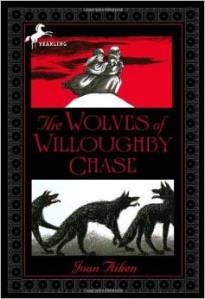
wolvesThe Wolves of Willoughby Chase, The Narnia Chronicles, Charlotte’s Web  and many other books lived through my mother’s readings. Each page brought a new sight and sound as if the story were actually developing right there in our house. Characters even had distinctive voices, and if my mother deviated from them, my sister and I protested, which I’m sure was extremely annoying. But she never complained. We cried together when Charlotte died, and my sister and I spent many happy hours playing in my parent’s wardrobe, looking for an entrance to Narnia. lion

So, as Mother’s Day approaches, I’m extremely thankful that I had a mother who read to me. I can’t imagine a better gift than a lifelong love of books: “You may have tangible wealth untold, caskets of jewels and coffers of gold. Richer than I you can never be–I had a Mother who read to me.” (Read the poem in its entirety below).

ChalotteThe Reading Mother
by Strickland Gillilan*

I had a mother who read to me
Sagas of pirates who scoured the sea,
Cutlasses clenched in their yellow teeth,
“Blackbirds” stowed in the hold beneath.

I had a Mother who read me lays
Of ancient and gallant and golden days;
Stories of Marmion and Ivanhoe,
Which every boy has a right to know.

I had a Mother who read me tales
Of Gelert the hound of the hills of Wales,
True to his trust till his tragic death,
Faithfulness blent with his final breath.

I had a Mother who read me the things
That wholesome life to the boy heart brings–
Stories that stir with an upward touch,
Oh, that each mother of boys were such!

You may have tangible wealth untold;
Caskets of jewels and coffers of gold.
Richer than I you can never be–
I had a Mother who read to me.

From Your Daily Poem: Strickland Gillilan (1869-1954) was an American humorist, lecturer, and poet. Born in Ohio, Strickland started out as a journalist and worked for several different newspapers, including the Washington Post. While on staff at the Richmond Daily Palladium, he wrote a humorous poem about an Irish railroader that ended up in Life Magazine and led to swift national acclaim. Credited with writing the world’s shortest poem–“Lines on the Antiquity of Microbes”(subtitled “Fleas”): “Adam/Had ‘em.”–as well as one of the world’s most anthologized poems (this one), Strickland produced a huge body of work during his lifetime. He traveled the country for years, entertaining enthralled audiences with his witty novels, satirical essays, rollicking songs, and heartwarming poetry.