Love, Lattes, and Mutants: Adventure and humor meet teen romance

Love, LattesWith a book titled Love, Lattes, and Mutants (available today!–see my review here), you just know that author Sandra Cox has a good sense of humor, along with an adventurous spirit and a creative imagination. Delving  into Love, Lattes, and Mutants proves it, as does the following mini-interview…

Finding love is hard, even when you aren’t a mutant.

Like most seventeen-year-olds, Piper Dunn wants to blend in with the crowd. Having a blowhole is a definite handicap. A product of a lab-engineered mother with dolphin DNA, Piper spends her school days hiding her brilliant ocean-colored eyes and sea siren voice behind baggy clothing and ugly glasses. When Tyler, the new boy in school, zeroes in on her, ignoring every other girl vying for his attention, no one, including Piper, understands why…

Then Piper is captured on one of her secret missions rescuing endangered sea creatures and ends up in the same test center where her mother was engineered. There she discovers she isn’t the only one of her kind. Joel is someone she doesn’t have to hide from, and she finds herself drawn to the dolph-boy who shares her secrets. Talking to him is almost as easy as escaping from the lab. Deciding which boy has captured her heart is another story…

Sandra CoxBio and mini-interview

Multi-published author Sandra Cox writes YA Fantasy, Paranormal and Historical Romance, and Metaphysical Nonfiction. She lives in sunny North Carolina with her husband, a brood of critters and an occasional foster cat. Although shopping is high on the list, her greatest pleasure is sitting on her screened in porch, listening to the birds, sipping coffee, and enjoying a good book. She’s a vegetarian and a Muay Thai enthusiast.

Where is one place you want to visit that you haven’t been before?
Hawaii is definitely on my bucket list.

If you could have any accents from anywhere in the world, what would you choose?
England. I love listening to Brits.

What do you like to do when you’re not writing?
Read, shop and go to the movies.

What were your favorite books when you were a child?
Anything that had a horse in it.

Buy Love, Lattes, and Mutants

Amazon , Barnes and Noble , Kobo

And be sure to enter the giveaways:

First prize: A Piper-approved necklace and $10 Starbuck Card

SandraCoxGiveaway


Second Prize: A Piper-approved bracelet

SandraCoxsecondprize


Divergent Writing: Tips from author Veronica Roth

Am I the last person in the world to read Divergent by Veronica Roth? Okay, so perhaps that’s a slight exaggeration.

Still, even though Divergent sat in my to-read pile for more than a year, I remained fuzzy on the plot. A conversation with my niece, then 13-years-old, didn’t clear up the intricacies: an overview of the story  wandered off into a discussion of what faction we would belong to and how no one’s personality can be defined by a single trait. She was clearly a combination of dauntless and abnegation, and I was left with a vague impression of the houses from Harry Potter’s Hogwarts. After consuming Divergent over the weekend, I now realize how wrong I was.

Ms. Roth’s tale of a dystopian society unfolds in a clean, elegant prose–not a stray adverb or adjective to be found–and the factions reflect the protagonist’s unflinching observations. So it came as no surprise when I read Ms. Roth’s writing advice, among the bonus materials in the back of the book, that her tips contained a straightforward simplicity; although, I’m sure, not particularly easy to implement:

Divergent’s Bonus Materials ~ Writing Tips from Veronica Roth:

Stage One: Word Vomit. (Sorry for the graphic image there.) Just write. Do not reread what you’ve just written, even if you don’t remember it and you want to check it for the sake of consistency. Don’t do it! You will be tempted to edit, and editing before you finish the draft is the enemy of writing progress.

Stage Two: Let it sit for a while. This is a good time for you to reconnect with friends and family you may have neglected while writing, and to recharge your writer batteries, so to speak. Not writing is as important as writing— go out into the world and remember how interesting it, and the people in it, are.

Stage Three: Reread, and make notes. I prefer the Microsoft word in-text comments, but I have also used notebooks. I try to write down big, plot-or-character- shifting things the first time I reread. Like “remove this character” or “the end has to happen differently” or “set up this huge plot element earlier in the story.”

Stage Four (view spoiler): Rip draft to shreds. The phrase “murder your darlings” (meaning: the stuff in your manuscript that you love best is probably the stuff that needs to go- and you have to be willing to get rid of it) has been important to me in developing as a writer. I try to make it a big, dramatic event wherein I save my old draft, copy past the text into a new document, and start deleting huge sections of text. It hurts, but it’s oddly-liberating. The story can become something new now- something better than it was before, something it couldn’t become if you clung to everything.

Stage Five: Start writing again.

~~

What do you think? Good advice?

Forget Punxsutawney Phil, I say summer is around the corner…

Pigeon RiverForget Punxsutawney Phil, I say summer is around the corner… or at least in my mind, which seems fixated on warmer days filled with biking, hiking, and splashing in Lake Emma. Blame it on the dreadful weather forecast–rain: a word one never utters in a ski town. So, I’m allowing myself to drift away from the gloomy drizzle, which is turning my ski trails and slopes into mush, and remember a sun-smothered day surrounded by greenery and butterflies, a little like stepping into a children’s book.MTB

~~

A blue cloud hovered over the mud puddle. It burst apart as my mountain bike bounced, then splashed, through the water. Dozens of butterflies flitted around me. Their delicate wings sliced through the air, so close I imagined a soft caress. I pedaled past them and they rejoined, becoming a cloud once again and settling near the water.

I hesitated, straddling my bike, and turned around. A butterfly fluttered its wings and rose, but the others were still. They appeared as one being, a giant winged creature of a blue so extraordinary it seemed not of this earth.

The moment felt like a gift, as if I had tumbled into a favorite storybook: The Secret Garden mixed with a dash of The Wizard of Oz. Few creatures whisper magic like the butterfly and its winged friends. I had never thought much about these insects until we bought our house in northern Michigan. There, among the red pines and restless wind, they gather like welcome guests, friends returning after the brutality of winter.

SunsetKayakA few years ago, while paddling the headwaters of northeastern Michigan’s Ocqueoc River, I rounded a corner and encountered dozens of green damselflies. My paddle dangled in my fingers, and they descended upon my kayak. I drifted in the narrow river. Their wings vibrated in the sun, and they moved constantly, sensing what I was unable to see.

Last summer zebra-striped dragonflies zipped along while I paddled the Upper Peninsula’s Indian River. At times they crashed into me, their bodies feeling strangely powerful. And on northeastern Michigan’s Black River, butterflies flounced among white pom-pom flowers, the scene so perfect it belonged in a children’s picture book.

These winged creatures are nature’s showstoppers, never failing to entertain. Returning one evening from a hike, my headlamp caught a giant, brown moth gathered on our porch. Attracted to the light splashing from inside, it looked almost prehistoric. Petite pink-and-yellow moths rested nearby.

On another kayak trip, my paddle skimmed over northern Michigan’s Lake Emma. Drops flew in the air, and I noticed a black-and-white dragonfly playing in the spray. It flitted here and there, in and out of the moisture. I paused, captivated by the charm of a dragonfly’s water dance, another opportunity to see how magical, how astonishing the world really is.

Goodreads Review: Fantasy and History Blaze with Steamy Romance

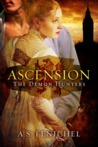
Ascension (The Demon Hunters, #1)Ascension by A.S. Fenichel
My rating: 5 of 5 stars

When Lord Gabriel Thurston, the Earl of Tullering—his formidable title is equaled by his handsome, powerful bearing—returns from a French battleground, he finds his fiancée, Lady Belinda Clayton, greatly changed. Gone is the sweet, innocent debutante he knew before leaving for war, replaced by a strong, secretive beauty with a bravery to match and a tendency to explore London’s seamier neighborhoods late at night.

So begins A.S. Fenichel’s adventurous novel—the first in the Demon Hunters series—and what follows is a page-turning blend of historical romance, fantasy, and mystery, mixed with steamy passion.

Soon Gabriel discovers that Belinda has joined forces with an army of demon hunters to battle the evil hordes overtaking Great Britain. He enlists on the effort, and together they confront a force that might tear them apart. The combat takes them to Scotland, where Belinda unearths a dark family secret, and risks her life to destroy a demon sect.

I strongly recommend this novel. Hidden below the intrigue and bloodshed is a deeper message, connecting the shadowy demons lurking in Belinda’s England to the evil hidden in our own world. Its heart-pounding action, romantic hero, stereotype-breaking heroine–stronger and more adept at fighting than most men–will have you looking forward to the next installment in the series.

View all my reviews

Polish your craft: Affordable, online writing workshops

Looking to revise a manuscript or fine tune dialogue? Have you always wanted to learn more about magical plants or creatures? Then check out the writing workshops from Fantasy, Futuristic, and Paranomal Writers–there’s something for every writer, including planning for a book release.

I just can’t leave things alone…

Well, I’ve done it again, fiddled with my website while looking for a clean, minimalist header in which to place the Blood Stitches cover when it’s revealed soon by my publisher, Kensington-Lyrical. So this is the layout I decided on, and I would love some feedback. Please leave a comment and let me know what you think of the new site.

How to give your writing shine, volume and manageability

This insightful posting from author Vicky Lorencen finds a connection between hair products and the writing process… And a solution for getting the latter under control.

Vicky L. Lorencen's avatarWelcome to Frog on a Dime

Photo by Vicky Lorencen Photo by Vicky Lorencen

You’ve seen the commercials. There’s a woman with limpity blahsville hair. Her shoulders, schlumpy. Her eyes, rolled. She blows a puff of air upward from her lower lip and ruffles her scruffy bangs–the universal breath of disgust. Then, some product whooshes onto the screen. It’s a bottle of glamorous, sexy-smelling hope for hair. Ms. Lackluster snatches the wunderproduct, suds it through her sorry locks and voila! Cue the fans to blow a mane so magnificent as to make Fabio throw in the towel.

What if there was a “product” that could do the same–give shine, volume and manageability–to your writing? Good news! There is. It’s called Critique Group.

Here’s how this amazing product works:

Shine. Nothing will give your writing that dazzling sheen you desire like a robust critique. Your group can help you snip those dry, split ends created by worn or useless verbiage, identify stronger verbs and methodically polish your work.

Volume. Receiving regular…

View original post 348 more words

Genre Firsts: Books that defined romance, horror, and more

I love lists–favorite movies, books, ice cream flavors–you name it. So when I came across this article, The Originals: 5 Books That Defined Genres, I couldn’t resist clicking on the headline and delving in. The author, Jeff Somers, travels back in time to discover what novel was the first in its genre. Little Women, he claims, was the first young adult novel, while Frankenstein the first horror.

“As far as art forms go, the novel’s still a relative novelty (see what I did there), having only existed for a few centuries now—compared to, say, cave paintings or epic poetry. Even so, it might seem like the various genres of the novel—science fiction, horror, romance, mystery, young adult—have always existed. But there’s an origin for everything, even genres that seem age-old. While it’s never an exact science, here are five books that are arguably the first in their respective genres.” Read more

Literary Criticism, Little Friends, and Shameless Self-Promotion

AnneI’m not usually influenced by literary criticism. My reading has a more capricious slant—a year spent exploring the space program or delving into the Anne of Green Gables books, which I somehow missed when I was young, thinking myself, mistakenly, too sophisticated to enjoy them.

This, however, wasn’t always so. During my years as a young adult and reference librarian, I read millions—perhaps a slight exaggeration but fairly close to the truth—of reviews, knew what books were the popular, as well as literary, darlings, and could answer countless questions about current literature.

But I left all that behind when I switched careers. Now I drift from book to book, happy in my ignorance.

So it came as a surprise when I encountered the controversy swirling around Donna Tartt’s The Goldfinch (see: Why the backlash against Donna Tartt’s ‘The Goldfinch’ was so extreme by Douglas Perry of The Oregonian). The Goldfinch was, of course, on my too-read list, along with dozens of other books, but I had no idea it carried such dissension on its spine.

The critics, however, can keep their wordy quarrels and objections. Age and attempts at writing–with my own book, Blood Stitches, coming May 12 from Lyrical Press— have mellowed me.

Mr. Perry’s article reminded me of another Donna Tartt novel, The Little Friend, and the many happy hours I spent between its covers, lost in a fictional world so realistic I wouldn’t have been surprised to see one of the characters walk through the door. My time with The Little Friend whirled by much too quickly, and I fell into a slight depression when I arrived at its final pages.

Because of this, I’ve decided to devote part of my blog this year to revisiting old literary friends, whether the critics liked them or not, and to the occasional blast of shameless self-promotion for my own writing, which I hope the critics will love. But if they don’t then I’ll fall back on what I’m sure Donna Tartt is thinking–any publicity is good publicity.

~~~~

What book(s) have you loved but the critics hated?

Show, Don’t Tell

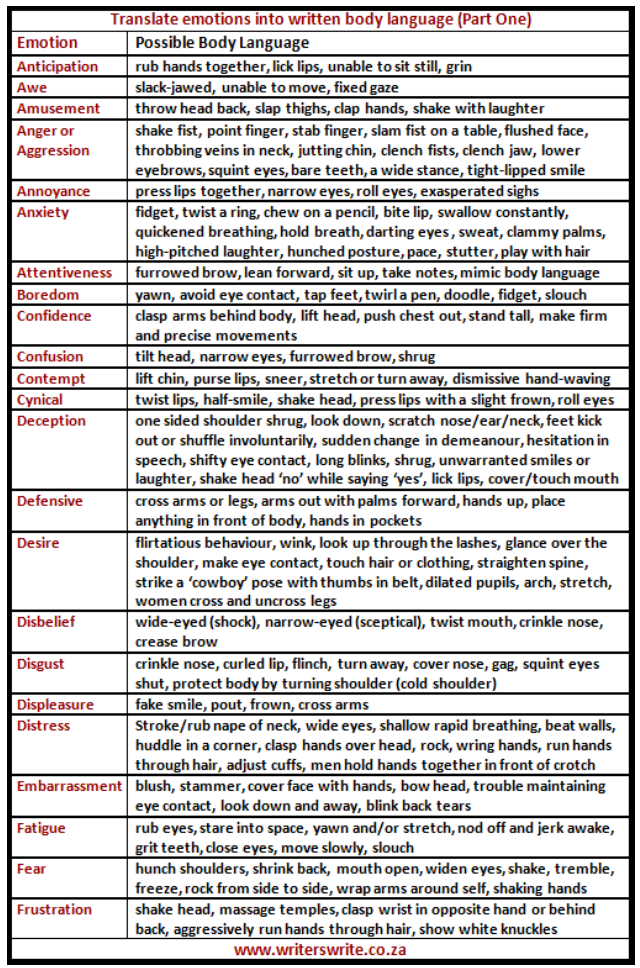
Excellent posting and cheat sheet with tips on how to “show not tell” from Lynette Noni.

Lynette Noni's avatarLynette Noni

This seriously awesome “cheat sheet” popped up in my Facebook and Twitter feed the other day and it’s simply too good not to share. It originated from a website called Writers Write:

2015/01/img_6211.png

2015/01/img_6212.png
As writers, we’re often told how important it is to “show, don’t tell” with our words. The funny thing is, it can be easier to write “tell” rather than “show”, but it’s waaaay better to READ “show” than it is to read “tell”. And really, as someone who spends a lot of time reading, I kinda hate it when I read writing that does more telling than showing, because it almost makes me feel dumb, you know? It sends the message that the writer thinks that to get their story across then they have to describe everything to the point that there’s no room left for my imagination to enjoy the creativity of filling in any gaps…

View original post 225 more words